Anatomy of a Champion: Decoding the AKC Greyhound Standard, Line by Line
Open the official AKC breed standard for the Greyhound and you will find fewer than a thousand words describing one of the oldest breeds on earth. Yet within that spare, almost architectural prose lies the entire logic of the show ring — and, breeders argue, the future of the breed itself.
To the uninitiated, phrases like "long, muscular loin" or "well let down pasterns" can feel like a foreign dialect. To breeder-exhibitors, they are precision instruments. Understanding what they actually mean, and where reasonable minds disagree, is essential to honoring the breed.
The Vocabulary of Speed
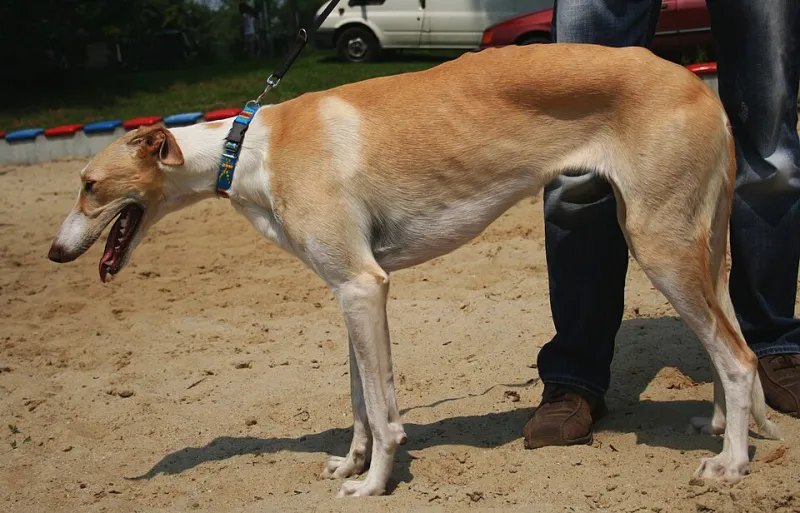
The standard's most famous instruction is its overarching demand for "greyhound geometry" — a term encompassing the deep chest, the extreme tuck-up, and the long, low-set pelvis that together allow a hound to double its stride length at full gallop. This is not aesthetic preference. Each element is a mechanical solution to the problem of coursing game at speed.
Consider the loin. When the standard calls for a "long, muscular loin," judges are assessing the flexible hinge between rib cage and pelvis. In motion — or in the stacked pose of the ring — a properly constructed loin allows the hind legs to reach under the body and drive forward. A short, rigid loin breaks that chain. "You can hide a lot of faults with conditioning," says one longtime Midwestern breeder-exhibitor, "but you cannot hide a loin. The dog either folds like a bow or he doesn't."
Angulation receives similar scrutiny. The standard calls for moderate rear angulation, and the word moderate is doing heavy lifting. Over-angulated rear assemblies, fashionable in some sporting breeds, would be a functional liability for a sighthound built for sustained double-suspension gallops rather than tight turns. Breeders here are adamant: the Greyhound is not a German Shepherd stretched on a frame. The angulation must serve the gallop.
Where the Standard Is Contested
No standard is read without interpretation, and the Greyhound standard has its fault lines. The most persistent debate concerns head planes — the relationship between skull and muzzle. The standard asks for a "rather long, narrow skull" with "little or no stop," a description that leaves room for genuine divergence among breeding programs. Some rings reward the longer, more refined head; others favor a stronger, slightly broader skull that harkens to the breed's working origins.
Coat and color generate less controversy than newcomers might expect — the standard famously permits "all colors" — but size remains a quiet battleground. The standard gives generous ranges (dogs 28 to 30 inches, bitches 27 to 28 inches), and exhibitors routinely debate how far toward either boundary a winning dog can drift before proportion, not measurement, becomes the deciding virtue.
"The standard gives us ranges precisely because function has priority over arithmetic," one veteran judge observed at a regional specialty. "A dog at the top of the range with correct proportion beats a mid-size dog whose parts don't fit."
Function as the North Star
What unites nearly every serious breeder is the conviction that the standard exists to protect the Greyhound's function as a sighthound. Every clause, read correctly, is a preservation clause. The deep brisket protects heart and lung capacity. The long, well-angulated shoulders extend reach. The firm, tight feet and low hocks convert muscle into ground. Remove any one of these, and you begin dismantling a hunting machine refined over millennia.
This is why breeder-exhibitors view casual criticism of conformation showing — the idea that it is merely a beauty contest — as a misunderstanding of purpose. The ring is a working audit. Judges are not rewarding the prettiest dog; they are asking, in thirty seconds of hands-on examination and a down-and-back, whether this animal could do the job its ancestors did.
Why Pet Owners Should Care
It is tempting to file the breed standard under esoterica, relevant only to those with a dog trailer and a show lead. Breeders make a different argument, one with direct consequences for adopters and pet owners.
A dog bred to the standard is a dog built to move comfortably for a lifetime. The same structure that wins a five-point major in Louisville or at the Greyhound Club of America's national specialty is structure that supports sound joints, efficient gait, and healthy aging. Pet owners who understand the standard are better equipped to evaluate breeders, to recognize a well-made puppy, and to appreciate why a retired racer's deep chest and lean frame are features, not oddities.
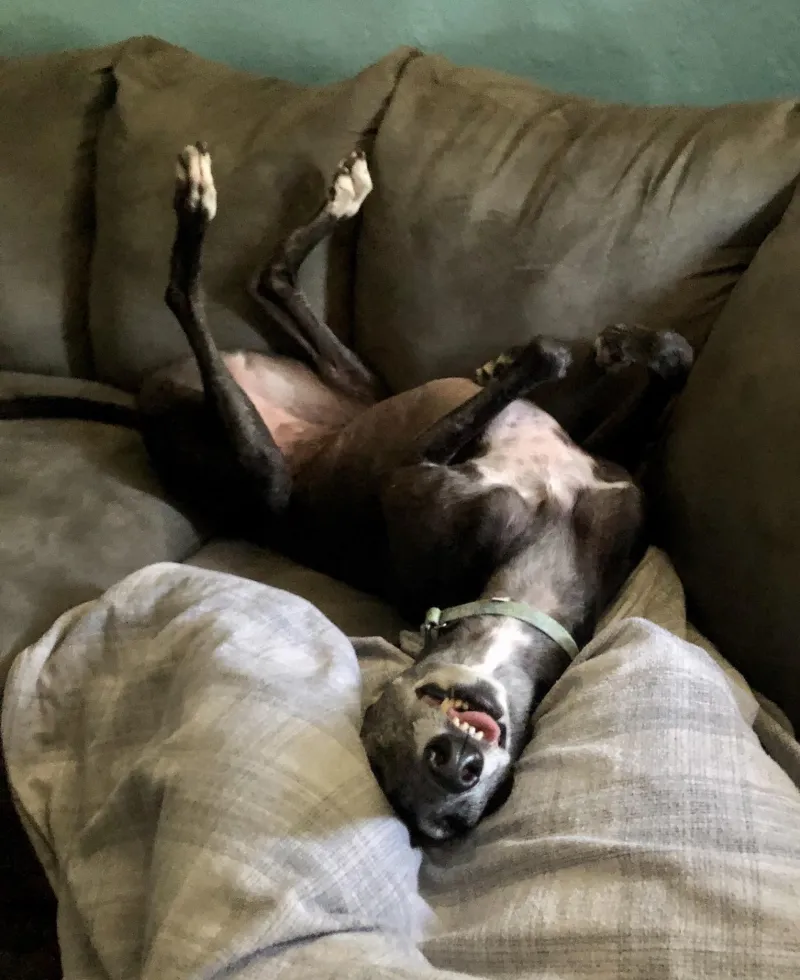
Adoption advocates make a related point: the standard is a shared language between the show world and the adoption world. The elegant, aerodynamic silhouette that judges reward is the same silhouette that makes a retired racer such a graceful, gentle housemate. Conformation and companionship are not rival values. They descend from the same blueprint.
Reading It Again
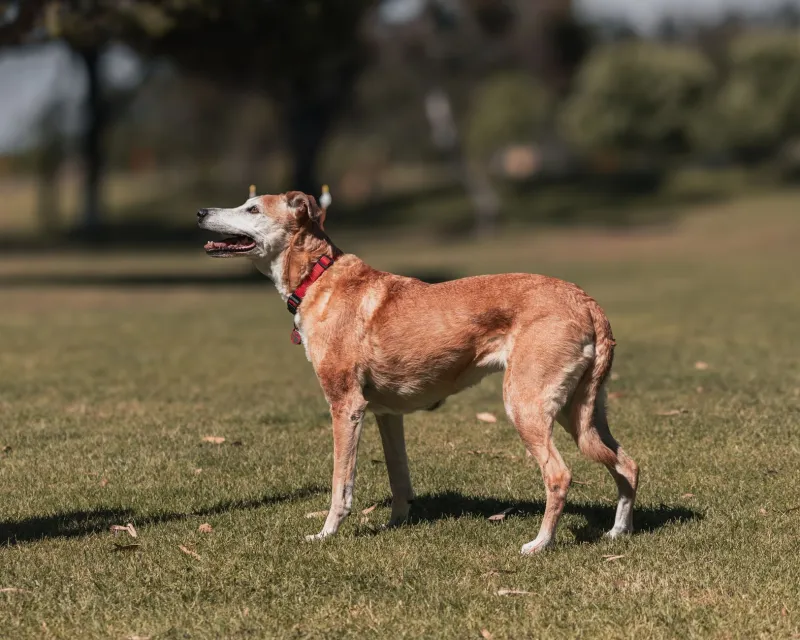
The Greyhound standard rewards rereading. Its economy of language conceals generations of accumulated knowledge — what works at speed, what holds up over a lifetime, what keeps the breed recognizably itself. For those who show, it is a rubric. For those who breed, it is a covenant. And for everyone who has ever watched a Greyhound stretch into a full run in a fenced field, it is simply an explanation of what they are seeing.
The geometry is not an abstraction. It is the dog.