The Quiet Leash: Retired Greyhounds Take On Therapy Work in Hospitals, Schools, and Crisis Rooms
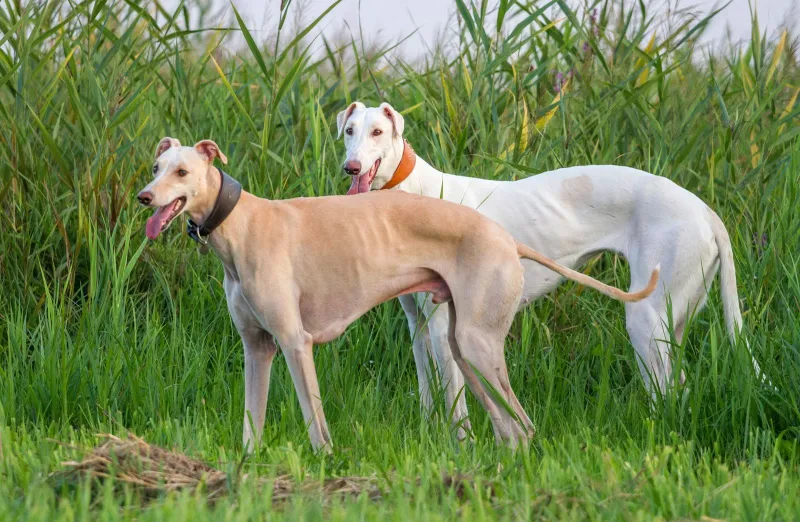
Photo: greyhound therapy dog hospital visit calm retired racing greyhound handler, via cdn.britannica.com
A Breed Built for Stillness
Greyhounds are famous for the burst: the explosive first turn, the blurred rail, the stretch drive. What is less celebrated is the trait that makes many of them exceptional in a hospital corridor or a school library—the ability to stand quietly, lean gently into a stranger's hand, and remain unbothered by the ordinary chaos of human life.
That contrast is the starting point for a growing movement within the U.S. Greyhound community. Adoption groups, volunteer handlers, and facility-dog programs are increasingly looking at retired racers not only as household companions but as candidates for therapy and facility work. The appeal is not sentimental. It is practical: a dog that is calm, tolerant, socially neutral, and content to lie still for long stretches can be a strong fit for settings where a bounding adolescent retriever would be a liability.
The work is not automatic, and the organizations involved are careful to say so. A retired Greyhound is not a therapy dog because it is retired. It becomes one through screening, training, and a handler who understands both the breed and the setting.
What the Screeners Look For
Placement coordinators who specialize in therapy-dog candidates describe a temperament screen that begins long before formal training. The first question is not whether the dog is friendly—most are—but whether the dog is resilient. A therapy dog must recover quickly from a dropped tray, a shouted page, a wheelchair turning too close, or a child who grabs an ear. The second question is whether the dog seeks or tolerates unfamiliar contact without becoming clingy, fearful, or over-aroused.
Greyhounds often score well on the tolerance side. They are typically gentle with people, not prone to guarding, and relatively restrained in their greetings. Many are also quiet in the home, which translates well to a library or a patient room. But the breed is not uniform. Some hounds retain a strong prey drive, startle easily at loud noises, or find slippery hospital floors genuinely distressing. A good screening process identifies those individuals early and steers them toward homes where they can simply be pets.
Health and structure matter as well. A therapy dog needs sound feet, a comfortable stance on hard surfaces, and the stamina for a two-hour shift that is mostly standing, walking, and lying down in unfamiliar places. The Greyhound's thin coat and low body fat mean handlers must think carefully about temperature, bedding, and rest breaks. A dog that is cold, sore, or exhausted is not a working dog, however willing its disposition.
The Training Ladder
Handlers and program coordinators describe a sequence that typically begins with basic manners and confidence building. Most candidates first earn an AKC Canine Good Citizen title or its equivalent, then move through a therapy-dog evaluation administered by a recognized certifying body. The evaluation is not a trick test; it is a structured observation of how the dog handles strangers, other dogs, medical equipment, clumsy handling, and separation from the handler.
Facility dogs—those who work alongside a professional in a courthouse, hospital, or school—often go further. They may be trained to settle under a desk, walk a specific route through a building, ride an elevator without hesitation, and remain neutral around food and cleaning chemicals. Some programs use a public-access test modeled on service-dog standards, though the legal status of a facility dog is distinct from that of a service animal under the Americans with Disabilities Act. Handlers are careful to explain the difference: a therapy dog provides comfort and motivation; a service dog performs a task for a person with a disability.
The training is rarely finished. Handlers describe ongoing proofing sessions—practice visits to a quiet wing of a hospital, a school gymnasium, a courthouse hallway—where the dog learns that the work is routine and the handler learns where the dog's limits lie.
Where the Leash Leads
The settings are more varied than many adopters realize. In hospitals, Greyhounds visit patient rooms, rehabilitation units, and staff break rooms. In schools, they sit with reluctant readers or offer a calm presence during testing weeks. In crisis-response work, they may be deployed to disaster recovery centers, first-responder decompression events, or courthouse waiting rooms where a witness is preparing to testify.
Handlers who do this work describe a common response: people who are frightened, grieving, or exhausted often approach a quiet hound before they will approach a person. The dog becomes a bridge. One handler in the Midwest, who asked not to be named because her facility does not publicize individual visits, said the most useful thing her Greyhound does is nothing at all. "He just stands there and lets people lean on him," she said. "That is the whole job."
Placement organizations are responding by building pipelines. Some adoption groups now flag therapy-dog candidates during intake and pair them with experienced handlers who are willing to complete certification. Others host temperament clinics or partner with local therapy-dog registries to streamline evaluation. The Greyhound Club of America's adoption advocacy work has long emphasized matching the right hound to the right home; the therapy-dog pathway is an extension of that principle, not a departure from it.
The Case for a Second Career
There is a temptation to frame retirement as a soft landing—a well-earned rest after a racing career. That framing is not wrong, but it is incomplete. For some Greyhounds, the transition to a working therapy or facility role offers structure, social contact, and a sense of purpose that suits the breed's temperament. It also gives adopters a way to participate in their communities that is grounded in the dog's welfare rather than the handler's convenience.
The organizations involved are quick to add a caution. Therapy work is not a rescue remedy, and it is not for every hound. A dog that is anxious, sound-sensitive, or physically uncomfortable should not be pushed into a certification pipeline for the sake of a narrative. The ethical standard is the same one that governs adoption: the dog's quality of life comes first.
When that standard is met, the results can be remarkable. A retired racer that once knew only the rail and the kennel can learn the soft rhythm of a hospital hallway, the hush of a reading circle, the careful approach of a child. The leash is quieter now. The purpose is no less real.